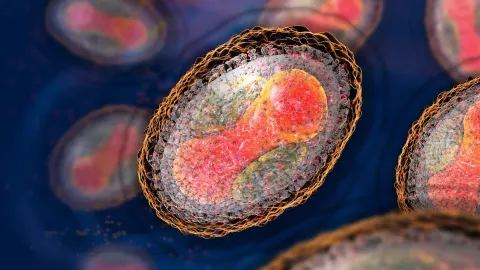
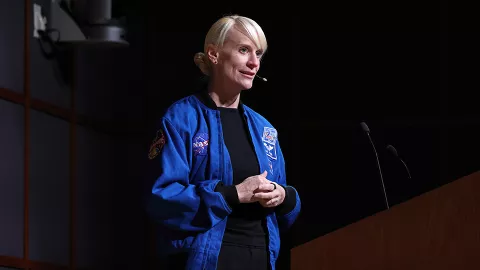
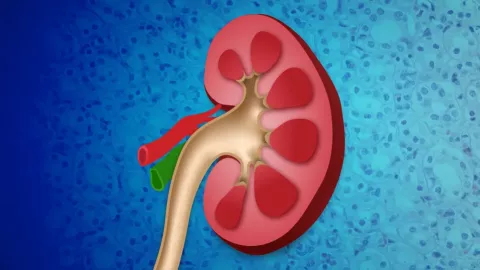
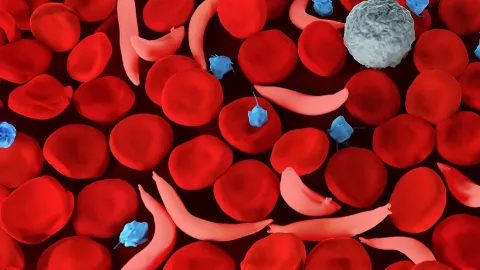
News Events Search News Type - Any -Media AdvisoryProfilesStatementMedia AvailabilityNews ReleaseNewsletter Year - Any -2008200920102011201220132014201520162017201820192020202120222023202420252026 Browse by Month JAN FEB MAR APR MAY JUN JUL AUG SEP OCT NOV DEC DEC News Release A protein’s unique flexibility may help it respond when viruses attack Read more The Genomics Landscape NASA astronaut Kate Rubins featured at 2024 NHGRI Symposium Read more News Release What not to expect when expecting: when prenatal screening suggests cancer Read more OCT News Release Genomic variants that increase risk of kidney disease are found in nearly one-third of West Africans Read more The Genomics Landscape NHGRI appoints James Thomas as new NIH Intramural Sequencing Center Director Read more SEP News Release NHGRI appoints James Thomas as new director of NIH Intramural Sequencing Center Read more News Release NIH awards $27M to establish new network of genomics-enabled learning health systems Read more News Release Genetic carriers for sickle cell disease have higher risks of blood clots across diverse ancestries Read more News Release Differences in our DNA have major influences on how our genomes function, but how? Read more AUG News Release NIH pauses its Genetic Counseling Training Program to plan new leadership-development initiative Read more News Release Leading AI models struggle to identify genetic conditions from patient-written descriptions Read more JUL News NHGRI appoints Marcus G. Hodges as director of Intramural Training Office Read more The Genomics Landscape Inaugural class of ASHG-NHGRI Genomics and Public Service Fellows arrives Read more JUN News Release NIH partners with National Science Foundation to award over $15M for RNA research Read more MAY News Release Scientists generate the first complete chromosome sequences from non-human primates Read more News Release Three new approaches tackle challenging design problems in genomics technology development Read more Media Advisory NIH invites press to discuss new investments in RNA research Read more The Genomics Landscape NHGRI conducts evaluation of CEGS Program Read more The Genomics Landscape Annual meeting supports NHGRI trainees in their research and careers Read more APR News Release Scientists discover over 100 new genomic regions linked to blood pressure Read more News Release New DNA statue to be unveiled at NIH on National DNA Day Read more The Genomics Landscape NHGRI Office of Genomic Data Science hits its stride Read more MAR News Release Studying mitochondrial DNA sheds light on the importance of vitamins Read more News Release Knowing a bit of genetics can go a long way Read more FEB News Release More widespread access to genomic medicine vital for studying a rare, underdiagnosed blood disorder Read more News Researchers optimize genetic tests for diverse populations to tackle health disparities Read more The Genomics Landscape NHGRI revamps state-level legislative database Read more JAN The Genomics Landscape Adam Phillippy appointed founding director of new Center for Genomics and Data Science Research Read more Profile Bettie Graham retires after over 50 years of federal service Read more