
2020 NHGRI Strategic Vision
 Access Strategic Vision via: Nature (read-only through Nature SharedIT link) | PubMed Central (full access to PubMed Central version)
DISCLAIMER: This strategic vision was published in October 2020 and is being implemented through 2030. In 2025, NHGRI revised the implementation of the strategic vision to ensure alignment with the current Administration’s priorities. These changes are reflected on this webpage.
2020 NHGRI Strategic Vision
Strategic vision for improving human health at The Forefront of Genomics
The Future of Genomics: 2020 and Beyond
Since the successful completion of the Human Genome Project in 2003, the promise of genomics is being realized in research, medicine, and society. Genome sequencing costs continue to shrink, studies continually advance our understanding of genome biology in health and disease, and genomic medicine is becoming a reality.
Where does the field of human genomics go from here? What challenges lie ahead? What new discoveries are on the horizon?
The National Human Genome Research Institute (NHGRI) recently published its 2020 Strategic Vision, which presents a compendium of ideas that together begin to answer these important questions and provides a compelling glimpse at the opportunities in human genomics for the coming decade.
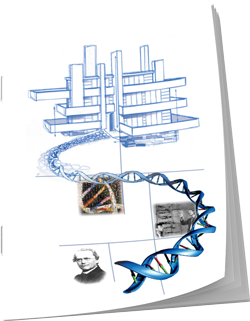
The 2020 NHGRI Strategic Vision is the third of its kind since the completion of the Human Genome Project. The previous two strategic visions were published by the institute in 2003 and 2011,respectively.
2003
2011

2020

The 2020 Strategic Vision is organized into four major areas
Guiding principles and values for human genomics
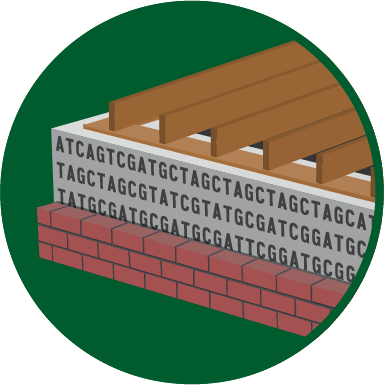
Sustain and improve a robust foundation for genomics research

Breaking down barriers that impede progress in genomics
Compelling genomics research projects in biomedicine
Guiding principles and values for human genomics
- Maintain an overarching focus on using genomics to understand biology, to enhance knowledge about disease, and to improve human health – genomics is now foundational across the entire continuum of biomedical research, from deciphering fundamental principles of biology to translating that knowledge into disease prevention and medical advances.
- Strive for representing genetic variation in all aspects of genomics research, committing to the systematic recognition of individuals who have not been represented in major genomic studies – attention to genetic diversity in genomics research is scientifically essential, including meaningful, sustained partnerships with a breadth of communities in the design and implementation of research studies, the propagation of research findings, and the development and use of new technologies.
- Maximize the utility of genomics for all members of the public, including the ability to access genomics in healthcare – engagement with and understanding of the needs of all people are required to ensure that all members of society benefit from genomic advances, with particular attention given to the use of genomics in healthcare that avoids exacerbating and strives towards reducing health disparities.
- Champion a genomics workforce with a breadth of skills and backgrounds – the promise of genomics cannot be fully achieved without attracting, developing, and retaining a talented workforce, including individuals of many different skills and experiences.
- Provide a conceptual research framing that consistently examines the role of both genomic and non-genomic contributors to health and disease – routinely considering the importance of social and environmental factors influencing human health (and the interactions among those components and genomics) will be important for the comprehensive understanding of most human diseases.
- Promote robust and consistently applied standards in genomics research – the use of carefully defined standards (e.g., those for generating, analyzing, storing, and sharing data) has benefited genomics in significant ways, and this must include appropriate privacy and data-security protections for those participating in genomics research.
- Embrace the interdisciplinary and team-oriented nature of genomics research – starting with the Human Genome Project, some of the most challenging genomics endeavors have benefited from the creation and management of large, interdisciplinary research collaborations.
- Adhere to the highest expectations and requirements related to open science, responsible data sharing, and rigor and reproducibility in genomics research – the genomics enterprise has a well-respected history of leading in these areas, and that commitment must be built upon and continually reaffirmed.
- Pursue advances in genomics as part of a vibrant global community of genomics researchers and funders – the challenges in genomics require the collective energies and creativity of a collaborative international ecosystem that includes partnerships among researchers, funders, and other stakeholders from academia, government, and the commercial sector.
Sustaining and improving a robust foundation for genomics
- Genome structure and function
- Enable the routine generation and analysis of increasingly complex genomic data
- Use evolutionary and comparative genomic data to maximize understanding of genome function
- Genomic data science
- Develop novel methods and build sustainable data resources for genomics research
- Ensure facile storing, sharing, and computing on large genomic datasets
- Develop integrated knowledgebases and informatics methods for genomic medicine
- Genomics and society
- Understand the interrelationships between genomics and the social and environmental factors influencing human health
- Empower people to make well-informed decisions about genomic data and develop data-stewardship systems that reinforce their choices
- Increase the genomic literacy of all people
- Training and genomics workforce development
- Equip the next generation of genomic scientists with strong data science competencies, a deep understanding of emerging approaches, and advanced problem-solving skills to tackle future challenges, including the ethical, societal, and legal challenges
- Provide comprehensive training for healthcare providers to effectively integrate genomics into clinical practice and decision-making
- Foster a genomics workforce with a breadth of skills and experiences
Breaking down barriers that impede progress in genomics
- Laboratory and computational technologies
- Transform the study of the functional consequences of genomic variation by enhancing the scale of DNA synthesis and editing
- Maximally leverage the usability and utility of emerging datasets for genomic studies of human health and disease
- Biological insights
- Establish the means to determine the functional consequences of genomic variants affecting human health and disease
- Characterize intraindividual genomic variation and understand its role in human disease
- Implementation science
- Develop and assess strategies for implementing the use of genomic information in clinical care
- Test public health approaches for implementing population-wide genomic screening
Compelling genomics research projects in biomedicine
- Acquire an increasingly comprehensive view of the roles and relationships of genes and regulatory elements in pathways and networks
- Elucidate the genetic architecture of the majority of human diseases and traits
- Design studies that include populations from diverse genetic and geographical backgrounds to enable scientific discoveries and genomic medicine for all
- Understand how the use of genomics can influence concepts of health, disease, responsibility, identity, family, and community
- Extend multi-omic studies of human disease and health into clinical settings
- Design and utilize genomic learning healthcare systems for knowledge generation and clinical care improvement
Bold Predictions for Human Genomics by 2030
- Generating and analyzing a complete human genome sequence will be routine for any research laboratory, becoming as straightforward as carrying out a DNA purification.
- The biological function(s) of every human gene will be known; for non-coding elements in the human genome, such knowledge will be the rule rather than the exception.
- The general features of the epigenetic landscape and transcriptional output will be routinely incorporated into predictive models of the impact of genotype on phenotype.
- Research in human genomics will have moved beyond population descriptors based on historic social constructs such as race.
- Studies involving analyses of genome sequences and associated phenotypic information for millions of human participants will be regularly featured at school science fairs.
- The regular use of genomic information will have transitioned from boutique to mainstream in all clinical settings, making genomic testing as routine as complete blood counts (CBCs).
- The clinical relevance of all encountered genomic variants will be readily predictable, rendering the diagnostic designation “variant of uncertain significance (VUS)” obsolete.
- A person’s complete genome sequence along with informative annotations can be securely and readily accessible on their smartphone.
- Individuals from populations from diverse genetic and geographic backgrounds will all benefit from advances in human genomics.
- Genomic discoveries will lead to curative therapies involving genomic modifications for dozens of genetic diseases.

2020 NHGRI Strategic Vision
Access the 2020 NHGRI Strategic Vision via:
- Nature (full access to Nature PDF requires subscription)
- Nature (read-only through Nature SharedIT link)
- PubMed Central (full access to PubMed Central version)
- Full PDF
Bold Predictions for Human Genomics by 2030
Strategic Planning Process
Contributors
Share #Genomics2020 #FutureofGenomics


Last updated: October 7, 2022